Key Takeaways
- Can you get Botox and a chemical peel in the same week? Yes, for some patients. Certain treatments can even be performed during the same appointment, although the appropriate timing depends on the type of peel, your skin’s condition, and your provider’s assessment.
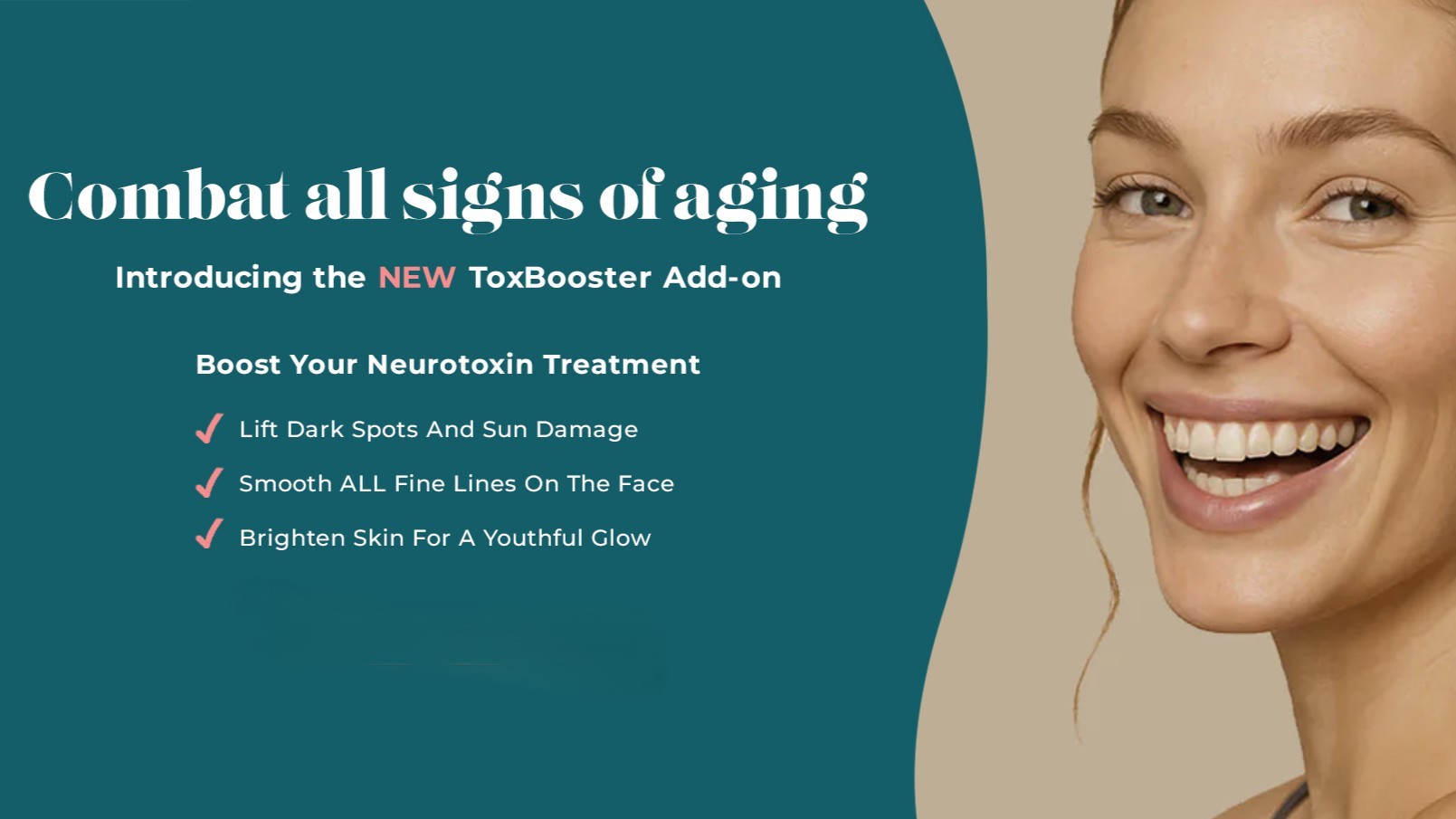
- ToxBooster™ combines Botox and a VI Peel in one treatment. Available at Greenwich Medical Spa, this approach is designed to address expression lines alongside concerns such as uneven skin tone, texture, and discoloration.
- Combining treatments may offer additional benefits. Clinical research on ToxBooster suggests that pairing a VI Peel with a neurotoxin injection may improve certain aesthetic outcomes compared with neurotoxin treatment alone.
- Treatment order and recovery still matter. ToxBooster follows a specific same-day protocol, while other Botox and chemical peel combinations may require separate appointments and additional healing time.
If you’re considering Botox and a chemical peel in the same week, you may be wondering whether the treatments can be safely combined, which should come first, and whether receiving both could offer additional benefits.
These are questions we often consider when developing a personalized aesthetic treatment plan.
Botox and chemical peels address different concerns. Botox temporarily relaxes targeted facial muscles to soften expression lines, while chemical peels exfoliate the skin to improve concerns such as uneven texture, discoloration, and dullness.
Because they work differently, combining Botox and a chemical peel may provide a more comprehensive approach to facial rejuvenation than either treatment alone.
In fact, there is a treatment specifically designed around this combination.
At Greenwich Medical Spa, we offer ToxBooster™, a treatment that pairs Botox with a VI Peel during the same appointment. This approach allows us to address both muscle-related expression lines and concerns involving the skin’s tone and texture.
However, not every chemical peel is appropriate for same-day treatment with Botox. The type of peel, treatment protocol, and your individual skin needs remain important.
Here’s what to understand about scheduling Botox and chemical peels, how ToxBooster works, and when combining treatments may be appropriate.
Can You Safely Get Botox and a Chemical Peel in the Same Week?
Yes. For some patients, Botox and a chemical peel can be performed within the same week. In certain circumstances, they can even be performed during the same appointment.
The important distinction is that not all chemical peels are intended to be combined with injectables using the same protocol.
Botox is a neuromodulator administered through small injections into targeted facial muscles. It generally involves minimal downtime, although temporary redness, swelling, tenderness, or bruising may occur.
Chemical peels work by exfoliating the skin. Depending on the formulation and depth of the peel, patients may experience dryness, redness, sensitivity, or visible peeling during recovery.
A superficial peel generally requires less recovery time than a medium-depth or deeper peel. This difference influences how closely treatments can be scheduled.
Traditionally, providers may recommend spacing Botox and chemical peel appointments to allow the skin to recover and to accommodate post-injection precautions.
However, certain combination treatments have been developed with a specific sequence that allows both procedures to be performed during one visit.
One example is ToxBooster, which combines a VI Peel with a neurotoxin injectable.
Rather than treating the procedures as two unrelated appointments, ToxBooster uses a defined treatment approach that considers how the peel and injections are performed together.
This does not mean every patient is a candidate or that any chemical peel can be paired with Botox on the same day.
We still need to evaluate your skin, medical history, treatment goals, and the appropriateness of the combination.
Should You Get Botox Before or After a Chemical Peel?
The appropriate treatment order depends on which chemical peel you’re receiving and whether you’re having two separate procedures or a treatment specifically designed to combine them.
For most treatment combinations, there isn’t one universally preferred sequence.
However, ToxBooster follows a specific order: the VI Peel is performed before the neurotoxin injections.
This distinction is important because a planned combination treatment is different from independently scheduling Botox and a chemical peel close together.
Getting Botox Before a Chemical Peel
If you’re receiving Botox first and planning a separate chemical peel afterward, we generally want to allow sufficient time for the injection sites to settle.
Following Botox, providers typically recommend temporarily avoiding rubbing, massaging, or applying unnecessary pressure to the treated areas.
This matters because chemical peel appointments involve cleansing, product application, and direct contact with the facial skin.
If a peel is performed too soon after Botox, these steps may conflict with recommended post-injection precautions.
Depending on the peel, your provider may recommend waiting several days or longer.
We would also consider any temporary bruising, swelling, or tenderness following your injections.
The goal is to ensure the skin is ready for the next procedure without interfering with Botox aftercare.
Getting a Chemical Peel Before Botox
Having a chemical peel first may also be appropriate.
When treatments are scheduled separately, the main consideration is whether the skin has recovered sufficiently before injections are administered.
A superficial peel may cause mild dryness or temporary sensitivity, while a more intensive peel can produce more noticeable redness, flaking, and peeling.
If the skin remains irritated or inflamed, Botox injections should generally be postponed until the treated areas have healed.
There is, however, an important exception to the assumption that a peel and Botox must always be separated.
ToxBooster is specifically designed to combine a VI Peel followed by neurotoxin injections during the same appointment.
The treatment follows a defined protocol rather than simply performing two unrelated procedures back-to-back.
For an appropriate patient, this offers a way to address multiple aesthetic concerns in one visit.
The key is that same-day treatment should be planned and performed according to the specific protocol, with a provider who has assessed whether the combination is suitable for your skin.
How Long After Botox Can I Get a Chemical Peel?
If you’ve already received Botox and are wondering how long you should wait before getting a chemical peel, there is no universal answer.
Your provider may recommend several days or longer between appointments, depending on the type of peel, the injection areas, and how your skin is recovering.
Several factors influence that recommendation.
The type and depth of the chemical peel. Superficial peels generally involve less intensive exfoliation than medium-depth or deep peels. More intensive treatments may require additional time between procedures.
Your skin’s condition. Irritation, inflammation, sensitivity, or an impaired skin barrier can affect when another treatment is appropriate.
The areas being treated. When Botox and the chemical peel involve overlapping facial areas, post-treatment precautions become particularly relevant.
Your response to Botox. Temporary swelling, bruising, or tenderness may influence when another facial procedure can comfortably be performed.
Your treatment plan. A patient receiving routine Botox and a superficial peel may have different scheduling needs from someone undergoing more intensive skin resurfacing.
It’s important to understand that waiting a certain number of days doesn’t automatically mean your skin is ready for another procedure.
We still want to assess how you’re healing.
If you’re interested in receiving both treatments during one appointment, ToxBooster may be worth discussing before scheduling Botox separately.
Because ToxBooster follows a specific same-day sequence, it should be planned as a combination treatment rather than added to a Botox appointment without an appropriate evaluation.
If you’re new to chemical peels, Chemical Peels 101: Everything You Need to Know Before Your First Treatment explains the different considerations involved in peel selection and recovery.
Why Does Treatment Order Matter When Combining Botox and Chemical Peels?
Treatment order matters because Botox and chemical peels work through different mechanisms and have different aftercare requirements.
Botox temporarily reduces activity in targeted facial muscles. Chemical peels exfoliate the skin at varying depths, depending on the formulation selected.
When these procedures are combined thoughtfully, they may address concerns that one treatment alone does not fully address.
This is also the reasoning behind ToxBooster.
Protecting the Skin During Recovery
After a chemical peel, your skin may be more sensitive to friction, certain skincare ingredients, and additional procedures.
Depending on the depth of the peel, you may need to temporarily adjust your skincare routine while the skin recovers.
For separately scheduled treatments, administering Botox while the skin is actively irritated or peeling may cause unnecessary discomfort.
With ToxBooster, the VI Peel and neurotoxin injections are performed according to a specific same-day protocol.
Even with this approach, proper patient selection and aftercare remain important.
Following Botox Aftercare Recommendations
Following Botox, providers commonly recommend avoiding unnecessary pressure or massage over the injection sites for an initial period.
Because chemical peels involve direct contact with the face, these precautions need to be considered when planning treatment.
This is one reason the order of procedures matters.
In the ToxBooster protocol, the VI Peel is performed first, followed by the neurotoxin injections.
This sequence allows the peel application to take place before the post-injection precautions begin.
Patients still need to follow the aftercare instructions provided for both components of the treatment.
Understanding How Each Treatment Is Working
Another benefit of understanding treatment order is recognizing that Botox and chemical peels address different aspects of facial appearance.
Botox is commonly used to soften expression lines caused by muscle movement.
A VI Peel may help address concerns involving skin tone, texture, discoloration, and the appearance of certain fine lines.
When combined, these treatments may provide benefits across multiple concerns.
The manufacturer of VI Peel has also reported clinical research evaluating this combination.
In a study conducted by the Vitality Institute and Wendy Roberts, MD, FAAD, and published in the Journal of Drugs in Dermatology, the combination of a VI Peel and neurotoxin treatment was associated with improvements in wrinkle appearance, skin tone, and sun-related discoloration.
According to the study results reported by VI Peel, the combination treatment produced a 60% decrease in wrinkles compared with 37% for neurotoxin treatment alone, using the study’s reported assessment periods. The manufacturer also reports improvements in skin tone and sun damage among patients receiving the combination.
These findings are encouraging, but they should be understood in the context of the specific treatment studied. They do not mean every patient will experience the same degree of improvement or that combining treatments will always outperform Botox alone.
What they suggest is that addressing both facial muscle activity and skin quality may offer additional aesthetic benefits for appropriately selected patients.
Can Botox and a Chemical Peel Be Done Before a Special Event?
If you’re preparing for a wedding, celebration, professional engagement, or another important occasion, you may be considering both Botox and a chemical peel.
The most important consideration is allowing enough time for treatment effects and recovery.
Botox does not work immediately. Changes may begin within several days, but the full response is often assessed approximately two weeks after treatment.
Temporary bruising or swelling can also occur.
Chemical peels have a different recovery timeline.
A superficial peel may involve relatively mild dryness or flaking, while a more intensive peel can cause redness, sensitivity, and visible peeling that takes longer to resolve.
If you’re considering ToxBooster, remember that although the VI Peel and Botox are performed during the same appointment, same-day treatment does not mean same-day recovery.
Your skin still needs time to respond to the peel, and the Botox component develops its effect over time.
For that reason, we recommend discussing your event date with your provider before scheduling treatment.
We can then determine whether ToxBooster or separately scheduled appointments are appropriate and how much time to allow.
If your event is approaching quickly, postponing a procedure may be preferable to rushing the treatment schedule.
Does the Type of Chemical Peel Affect How Soon You Can Get Botox?
Yes. The type and depth of the chemical peel are important considerations when deciding whether treatments can be combined.
Chemical peels vary in how deeply they exfoliate the skin and how much recovery they require.
This is also why a defined treatment such as ToxBooster should not be considered interchangeable with every other chemical peel and Botox combination.
Superficial Chemical Peels
Superficial chemical peels primarily affect the outermost layers of the skin.
They are commonly used to address mild uneven texture, dullness, and certain types of discoloration.
Recovery is generally less involved than with deeper peels, although temporary redness, dryness, and flaking can occur.
Because these peels are less intensive, they may be easier to coordinate with Botox.
However, even a superficial peel can cause irritation, so the treatment sequence should still be determined by your provider.
Medium-Depth Chemical Peels
Medium-depth peels penetrate further into the skin and typically involve a more noticeable recovery period.
Patients may experience greater redness, peeling, and sensitivity.
When these treatments are scheduled independently of Botox, we generally need to be more cautious about the interval between procedures.
The skin should recover sufficiently before another treatment is performed.
ToxBooster is different because it uses a specifically selected VI Peel treatment and a defined same-day protocol.
The decision to use this combination still depends on your skin’s condition and whether the treatment is appropriate for you.
Deep Chemical Peels
Deep chemical peels involve more extensive skin resurfacing and a substantially longer healing process.
They require careful medical evaluation, individualized aftercare, and more extensive recovery planning.
These procedures should not be approached with the same scheduling expectations as superficial peels or a planned ToxBooster treatment.
If you’re considering a deeper peel, your provider should establish an appropriate treatment and recovery schedule before proceeding with Botox.
For additional information about incorporating peels into your seasonal skincare routine, read Fall Skincare: Time For a Chemical Peel.
What Should You Consider Before Scheduling Both Treatments?
Before scheduling Botox and a chemical peel, it’s helpful to consider what you’re hoping to address with each treatment.
Botox is commonly used to soften expression-related lines, including certain forehead lines, frown lines, and crow’s feet.
Chemical peels address different concerns, including uneven skin tone, rough texture, and certain types of discoloration.
If both types of concerns are relevant to you, a combination treatment may be worth considering.
ToxBooster is designed for patients who may benefit from addressing both expression lines and skin quality during one appointment.
By pairing Botox with a VI Peel, the treatment takes a broader approach than Botox alone.
For example, Botox may help soften lines related to facial movement, while the VI Peel may improve the appearance of uneven pigmentation, texture, and other surface concerns.
Together, these effects may contribute to a smoother, more even-looking complexion.
However, receiving both treatments is not automatically necessary.
Some patients may benefit from Botox alone. Others may be better suited to a chemical peel or a different treatment plan.
If you’re still considering which aesthetic treatment aligns with your concerns, How Do I Know If My Skin Needs Botox, Filler, or Collagen Stimulation? provides additional guidance.
During your consultation, we also want to review your medical history, recent aesthetic procedures, current skincare products, and any history of skin sensitivity.
Certain skincare ingredients and recent treatments may influence how your skin tolerates a peel.
If you’re experiencing active irritation, inflammation, or sunburn, we may recommend postponing treatment until your skin has recovered.
Even when two procedures are performed during the same appointment, appropriate aftercare remains essential.
Our priority is to determine whether the combination makes sense for your skin and to recommend a treatment plan that supports your individual goals.
Why Fall Is a Popular Time to Plan Botox and Chemical Peel Treatments
Fall is often a time when patients revisit their skincare routines and consider treatments for concerns that have become more noticeable after summer.
Chemical peels may be of interest to patients looking to address uneven skin tone, texture, or the appearance of sun-related discoloration.
Botox may also be part of an established aesthetic maintenance routine for patients who want to soften expression lines.
For someone considering both treatments, ToxBooster offers an additional option to discuss.
Rather than focusing exclusively on expression lines or skin texture, the combination is designed to address both concerns within a coordinated treatment plan.
However, fall treatment planning still requires attention to recovery and sun protection.
Following a VI Peel, the skin may be more sensitive to ultraviolet exposure. Following the recommended skincare and sun-protection instructions remains important throughout the year.
If you’re considering ToxBooster or separately scheduled Botox and chemical peel appointments, planning ahead allows us to evaluate your skin and recommend an appropriate approach.
The goal is not simply to combine treatments for convenience. It’s to choose treatments that address your concerns while allowing for proper recovery.
Plan Your Botox and Chemical Peel Appointments With Greenwich Medical Spa
Botox and chemical peels can complement each other because they address different aspects of facial appearance.
For some patients, combining these treatments may offer additional benefits, particularly when concerns include both expression lines and uneven skin tone or texture.
At Greenwich Medical Spa, ToxBooster offers a coordinated approach that combines Botox with a VI Peel during one appointment.
The treatment is designed to address expression lines while also supporting improvements in the appearance of skin texture, tone, and discoloration.
Research on the ToxBooster combination suggests that pairing a VI Peel with a neurotoxin may provide additional aesthetic benefits compared with neurotoxin treatment alone, although individual responses vary.
That said, not every patient needs both treatments, and not every chemical peel is appropriate for same-day use with Botox.
At Greenwich Medical Spa, our approach begins with understanding your concerns, evaluating your skin, and explaining which options may be appropriate.
Whether you’re maintaining an established Botox routine, considering a chemical peel, or interested in trying ToxBooster, our team can help you make an informed decision.
Schedule a consultation with Greenwich Medical Spa to learn whether ToxBooster is right for you and develop a personalized treatment plan that reflects your goals and your skin’s needs.
Frequently Asked Questions
Can you get Botox and a chemical peel in the same week?
Yes. Some patients may be able to receive Botox and a chemical peel in the same week. Certain combinations, such as ToxBooster, are specifically designed for same-day treatment. However, not every chemical peel can be combined with Botox this way. Your provider should determine whether the combination is appropriate for your skin.
Should Botox come before or after a chemical peel?
The appropriate order depends on the treatments being performed. For separately scheduled procedures, either sequence may be suitable with adequate recovery time. ToxBooster follows a specific protocol in which the VI Peel is performed before the neurotoxin injections during the same appointment.
How long should you wait between treatments?
There is no universal waiting period. When Botox and chemical peels are scheduled separately, your provider may recommend waiting several days or longer, depending on the peel's intensity and your recovery. ToxBooster is a planned same-day combination that follows its own treatment protocol.
Can both be done before an event?
Yes, provided there is enough time for treatment effects and recovery. Botox may take approximately two weeks to reach its full effect, while chemical peel recovery varies. Even when both treatments are performed during one ToxBooster appointment, sufficient time should be allowed for healing and possible temporary side effects.
Why does treatment order matter?
Treatment order matters because Botox and chemical peels have different aftercare requirements. Following Botox, unnecessary pressure or massage over the injection sites is generally avoided for an initial period. Chemical peels can also cause temporary sensitivity and inflammation. ToxBooster addresses sequencing through a defined protocol that performs the VI Peel before the neurotoxin injections.