
Crepey skin is a common sign of aging, primarily driven by declining collagen and elastin levels. Explore which collagen-boosting treatments are most effective at restoring the skin’s appearance, specifically RF Microneedling, lasers, and biostimulators—what they do, who they’re for, and what to expect.
What Is Crepey Skin (and What Causes It)
While there are many causes of crepey skin, including aging, hormonal shifts, dehydration, weight loss, tobacco use, and stress, the main reason people develop crepey skin is prolonged or excessive exposure to sunlight.
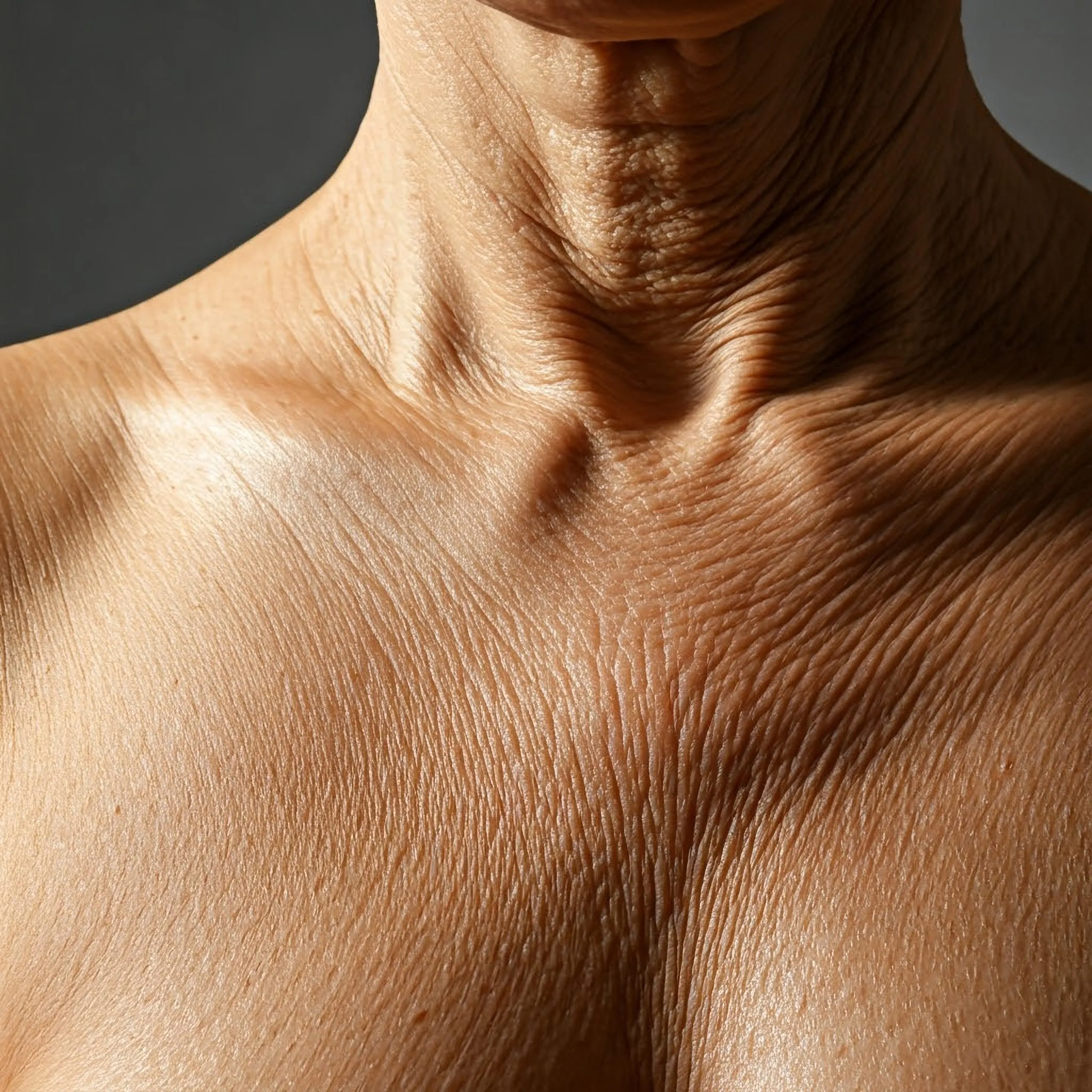
Over time, exposure to the sun and its UV rays damages skin cells, making it harder for the skin to retain moisture. This results in drier skin that’s more susceptible to wrinkles. In addition, UV rays break down collagen and elastin, essential proteins that keep the skin firm and elastic. The combination of reduced moisture retention and destruction of collagen and elastin leaves skin looking thin and fragile, with a finely wrinkled, crepey appearance.
Where Does Crepey Skin Show Up Most
Crepey skin appears most commonly on the face (especially under the eyes), neck, décolletage, and the inner upper arms. These areas are often targeted because they are frequently exposed to the sun and have thinner, more fragile skin.
Other common, yet less frequent, areas include:
- Legs: Specifically above the knees and inner thighs.
- Hands: Frequently seen on the backs of hands.
- Lower Arms/Elbows: Due to loss of collagen and sun damage.
Best Treatments for Crepey Skin
The best medical-grade treatments for crepey skin focus on stimulating collagen and elastin to tighten and plump skin, including RF microneedling, laser resurfacing, and biostimulators like Sculptra.
RF Microneedling for Crepey Skin
One of the most effective ways to reverse crepey skin on your face is RF Microneedling, also referred to as the “non-surgical facelift.” By combining traditional microneedling with advanced radiofrequency (RF) technology, RF Microneedling doubles down on collagen and elastin production.
How RF Microneedling Works
Microneedling creates controlled, microscopic injuries that trigger the body’s natural healing process, producing more collagen and elastin, while RF microneedling takes the treatment further by using the heat generated from RF energy to penetrate deeper into the dermis, stimulating collagen and elastin production even further. RF energy also tightens the skin by causing collagen contraction, making it an excellent option for addressing skin laxity.
Lasers for Crepey Skin
Fraxel laser uses fractional, microscopic laser columns to penetrate deep into the skin’s dermis, creating thousands of tiny, controlled thermal injuries while leaving surrounding tissue intact. Similar to microneedling, this process stimulates the body’s natural wound-healing response, boosting collagen production and replacing damaged skin with new, smoother, and healthier cells. Fraxel laser treats a fraction of the tissue (roughly 20-25% per session) at a time, which allows for faster healing and minimal downtime compared to fully ablative lasers.
Biostimulators for Crepey Skin
Biostimulating injections such as Sculptra offer a non-surgical way to replenish lost volume and improve crepey, thin, or sagging skin by stimulating the body’s natural processes. By providing re-hydration to the dermal layers of skin, Sculptra triggers the body to produce collagen for structure, strength, and long-lasting improvements in skin volume and texture.
Differences Between RF Microneedling, Lasers, and Biostimulators for Crepey Skin
RF Microneedling
- How it Works: Combines mechanical needling with radiofrequency energy to heat the dermis, triggering collagen and elastin production.
- Best for: Overall skin tightening, crepey texture on face/neck, and acne scars.
- Downtime: Minimal (1–3 days of redness/swelling).
- Skin Types: Generally safe for all skin tones, including darker skin, due to lower risk of pigmentation changes.
- Results: Gradual, cumulative improvement; usually requires 3–4 sessions. After the initial treatments, most patients see results for 6-12 months before needing maintenance treatments.
Lasers
- How it Works: Uses focused light energy to remove skin layers or heat the dermis without surface damage.
- Best for: Specific concerns like significant sun damage, wrinkles, and pigment irregularities.
- Downtime: Varies by intensity. Fraxel has minimal downtime (less than a week), while CO₂ may require up to two weeks for healing.
- Results: Can produce more dramatic, faster results in fewer sessions compared to microneedling.
Biostimulators
- How it Works: Injectable substances that stimulate the body’s own collagen production over time to strengthen the skin’s structure.
- Best for: Severe, widespread crepiness, volume loss, and skin laxity.
- Downtime: Almost none; minimal swelling or bruising.
- Results: Progressive, natural-looking improvement that develops over several months.
Why Greenwich Medical Spa
Known for our science-backed treatments and personalized approach, our expert team can help you restore crepey skin with the treatment that’s best for you. Ready to get started? Book a consultation to determine whether RF, laser, or biostimulators fit your skin goals.
Related Articles
RF Microneedling & Ultherapy Safety: How to Avoid Fat Loss & Choose the Right Provider
Ultherapy 101: How to Lift & Tighten Your Skin Without Surgery
How Do You Tighten Loose Skin After Weight Loss — Especially From GLP-1 Medications?